Greek Tragedy XIV: Sophocles’s Electra, or Not Your Aeschylus’s Electra

I think this is the first time we’ve encountered two different tellings of the same myth. We’re revisiting the story of how Orestes and Electra seek revenge on their mother. We’ve already seen how Aeschylus tells the story. Later we’ll see how Euripides handles it. Today, however, we get Sophocles’s take on it.

Discussion Prompts
  1. How sympathetic is Electra? Orestes? Clytaemestra? Aegisthus?
  2. Which play do you prefer: The Libation Bearers or Electra? Why?
  3. Why do you think Pylades is a non-speaking character? If you were writing a version of this story, how would you handle the character?
  4. What do you think of the Tutor’s story of how Orestes supposedly died? Is it believable? Why or why not?
  5. How many children do you think Agamemnon and Clytaemestra had? Why?
  6. How old do you think the children of Agamemnon and Clytaemestra are in this play? If you were directing this play today, how would you handle the ages of the characters? Why?
  7. If you were directing this play today, when would you set it? Why?
  8. Is Electra’s vengeance justified? Why or why not? What about Orestes’s actions?
  9. What do you think about Chrysothemis?

Greek Myth VI: Hymns to Demeter, or Why We Have Winter

There are two Hymns to Demeter among the Homeric Hymns (#2 & #13). Hymn #2 is my favorite. Hymn #13 is… short.

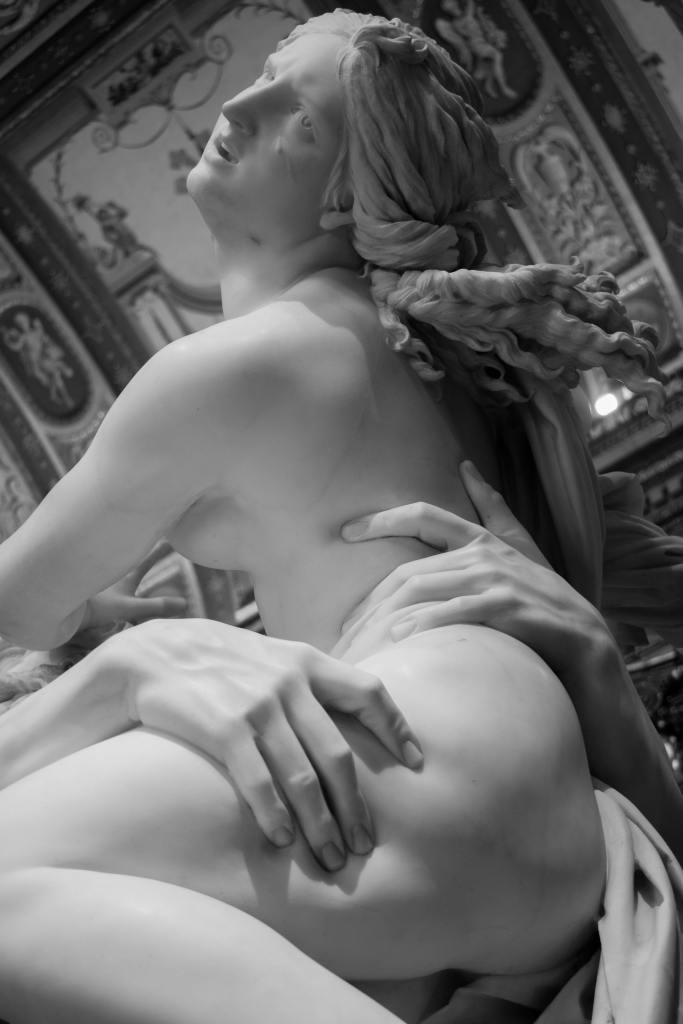
The myth told in #2 was one of the inspirations for my favorite of Bernini’s sculptures, found in the Museo Borghese in Rome. If you don’t know about Bernini, well, in this wonderful detail from that sculpture, you can see the magic he worked with marble. I don’t know how he made stone into flesh and tears, but he did.

Photo by Mateus Campos Felipe on Unsplash
Discussion Prompts
  1. Why do you think Gaia creates the flower that tempts Kore/Persephone?
  2. What do you think about Helios’s role in this story? Why?
  3. Throughout our reading of the Iliad, I’ve stressed the importance of names. We know the names of the men who are killed, even if they only appear in the poem long enough to die. What might this tell us about Kallidike, Kleisidike, Demo, and Kallithoe?
  4. The “forbidden fruit” in this story is a pomegranate. What do you think the “forbidden fruit” in Genesis is? Why?
  5. Would you have chosen to join the Eleusinian cult? Why or why not?
  6. What are your thoughts on Demeter? Persephone? Zeus? Hades?

Greek Epics XIV: Iliad Book 13, Featuring not One But Two Ajaxes!

Little Ajax finally gets a chance to shine! Okay, Big Ajax does, too. This is a grisly book, but you’ll have to read it yourself in order to enjoy all of the descriptions.

Discussion Prompts
  1. Are the gods ruled by fate? Why or why not?
  2. Who is your favorite character at this point? Why?
  3. Hektor listens to Poulydamas except for when he doesn’t want to. He’s pissed at Paris except for when he’s not. What do you think about him and/or his actions?
  4. Are you still enjoying this book? Too grisly? Ready for something else to happen?

Greek Comedy XI: Aristophanes’s The Frogs, or Let’s Make Fun of All the Tragedians

I love this play. And even more than I love this play, I love Stephen Sondheim’s version of it. For the record: It was performed in a swimming pool. Which is brilliant. And funny. And I have a hard time reading the original Aristophanes without trying to fit the songs to Sondheim’s melodies.

Discussion Prompts
  1. Which playwright would you bring back from the dead? Why?
  2. Which playwright do you think humanity needs most today? Is this a different person than you picked for #1? If so, why?
  3. Which is your favorite character? Why?
  4. Why do you think theatre and the arts are important?
  5. We recently read the Homeric Hymns to Dionysos. How do you think the portrayal of Dionysos in this play compares to the Dionysos we saw in the Homeric Hymns?
  6. What do you think of the vision of the afterlife as presented in this play? Is it better/worse/different than your vision of an afterlife? Or maybe it’s the same as your vision? How?

The Power of Myth II: The Message of the Myth, or I’ll Show You My Story if You Show Me Yours

In the second episode of The Power of Myth, Campbell speaks about creation myths, technology, and bliss. And a lot of other stuff, too.

Discussion Prompts
  1. Where do you find your bliss?
  2. What’s your favorite movie about technology?
  3. What’s your favorite “urban legend”/modern myth?

Greek Epics XIII: Iliad Book 12, or Yup, They’re Still Fighting

We’ve finished Book 12! We’re officially half-way through the Iliad, at least if you count by books.

Discussion Prompts
  1. What’s your favorite bird sign? Why?
  2. Who do you think is the “hero” of this book? Why?
  3. Why do you think there are so many “snow” similes?
  4. Who’s your favorite character in this book? Why?

Greek Tragedy XIII: Sophocles’s Oedipus Rex, Or You May Have Heard About His Odd Complex

You have probably heard about Oedipus before. And I do love this play. And I love how it is infiltrated popular culture. The hilarious Frasier episode parodying it aired when I was in college, and I remember Maria (AKA Triumvir Callirhoe) and I watching it in stitches. I can’t find a free place for you to watch it online, but you can read the transcript here.

But when I think about Oedipus Rex, my mind immediately goes to one of two places. There is, of course, the brilliant Tom Lehrer song referenced in the title of this episode.

But possibly less well known is the P.D.Q. Bach oratorio Oedipus Tex about the brother of Oedipus Rex. Or so he tells us in the introductory song. But I highly recommend listening to the entire oratorio.

All right, that’s the fun. Now onto the serious, or as serious as we ever get.

Discussion Prompts
  1. Greek heroes are supposed to have a tragic flaw. What do you think Oedipus’s tragic flaw is? Why?
  2. Why do you think the Sphinx is female?  What does this say about feminine knowledge and/or wisdom?
  3. We tend to use the word irony incorrectly, but this play is full of irony.  What are some examples?
  4. If you were to direct this play today, when would you set it?  Why?
  5. Why do you think this play/story remains so well known? Just because of Freud? Or is there something else about the story that speaks to us, and if so, what is that something?

Greek Myth V: Hymns to Dionysos, or Not Quite the God You Were Expecting

In this episode, we start working our way through the collection of poems known as the Homeric Hymns. And since Hymn 1 is about Dionysos, we start with the three hymns dedicated to him. And the god we see in these hymns probably isn’t quite what you imagine when you think of the god of wine and theatre.

Discussion Prompts
  1. In the Shelmerdine translation of Hymn 7, Dionysos’s eyes are described as blue.  This is interesting because the color blue took centuries to get a name, which is why ancient Greek literature regularly refers to the “wine-dark sea”.  What color is used in your translation?  What word do you think should be used?  Why?
  2. If you were to describe Dionysos without knowing anything about him, how would you describe him?  Now that you’ve read the Hymns to Dionysos, how has your description changed?
  3. Where do you think Dionysos was born?  Why?

Greek Epics XII: Iliad Book 11, or You Get an Aristeia and You Get an Aristeia and You Get an Aristeia!

All right, so technically there’s only one aristeia in Book 11, but it feels like there are more than that. For a fun explanation of what an aristeia is, check out this post on Greek Myth Comix.

Discussion Prompts
  1. Who is the nicer guy:  Patroklos or Hektor?  Defend your choice.
  2. I didn’t discuss what Nestor and Patroklos drink in the episode.  It is…  I’m going to try not to judge, so I’ll just ask:  What’s your favorite cheese to grate into your wine?
  3. What do you think of Nestor and his storytelling?  Why do you think he spends so much time speaking of his youth?
  4. What do you think about Hekamede?  We have her name and a bit of her history.  If you were to write a story from her perspective, what would it be like?

Greek Comedy X: Aristophanes’s Women at the Thesmophoria, or Let’s Make Fun of Euripides

Thesmophoriazusae or Women at the Thesmophoria or The Poet and the Women is not as famous as Lysistrat, but it is another gynocentric comedy by Aristophanes.

Discussion Prompts:
  1. How progressive/subversive/pick your modifier do you think this play is?  Why?
  2. If you were directing this play, what time period would you set it in?  Why?
  3. Who is the bigger misogynist:  Euripides or Aristophanes?  Why?
  4. Alternatively, is this not a misogynistic play?  Why or why not?
Design a site like this with WordPress.com
Get started