The Power of Myth I: The Hero’s Adventure, or George Lucas Loves Joseph Campbell

This series of episodes was prompted by this post. Yes, I borrowed from it to talk about buying groceries as a hero’s journey.

Discussion Prompts

  1. What’s your favorite myth? How does it follow the pattern of the Hero’s Journey?
  2. What’s your story? After all, we are all heroes in our own way.
Greek Epics XI: Iliad Book 10, or Who’s Up for a Night Raid?

This is one of the shorter books in the Iliad. But it’s rather bloody for its length…

Discussion Prompts
  1. Was Homer bad at math?  Why or why not?
  2. Do Dolon’s actions meet the heroic code?  Why or why not?
  3. How might this book have been different if Athena had taken the night off?
  4. What do you think about Diomedes?  Or Odysseus?

Greek Tragedy XII: Sophocles’s Women of Trachis, or Revenge is a Dish Best Served Cold

In this episode, we learn how Heracles dies. And how Nessus knew how to play the long game.

Discussion Prompts
  1. What does this play tell us about loyalty?
  2. What do you think about the portrayal of Heracles in this play?  Is he what you expect from him?
  3. Is it important that the chorus is comprised of the women of Trachis and not the people of Trachis?  How is gender important in the role they play?  Or is it not important?
  4. The play is stoic when Deianeira is alive and melodramatic after her death.  If you were directing this play today, how would you handle these very different tones?  

Greek Myth IV: Hesiod’s Shield of Heracles, or You Thought This Was Going to Be About Heracles, Didn’t You?

This interesting little poem isn’t actually by Hesiod. And it isn’t really about Heracles either.

Discussion Prompts

  1. Do you care to weigh in on whether or not this is by Hesiod?  What do you think?  Why?
  2. Would this poem benefit from being longer?  Why or why not?
  3. What is the purpose of an item of war depicting both war and peace?

Greek Epics X: Iliad Book 9, or Wait, Achilles is in This?

We finally see Achilles again in Book 9 of the Iliad. What are your thoughts on how well this meeting goes?

Discussion Prompts

  1. Phoinix seems to go off on a tangent when he starts talking about Meleagros.  Why do you think he thinks this story will be useful given the fact that Achilles has already pointed out that if he fights, he will die which renders all of the rewards moot?
  2. Do you believe Achilles when he says he doesn’t care about the rewards offered by Agamemnon?  Why or why not?
  3. Achilles claims to have loved Briseis.  Do you believe him?  Why or why not?
  4. Who is currently your favorite character?  Why?

Greek Comedy IX: Aristophanes’s Lysistrata, or Let the Women Handle It

Content Warning! It is impossibly to talk about Lysistrata without talking about sex. Consider yourself warned.

Discussion Prompts

  1. If you were directing this play today, what time period would you set it in?  Why?
  2. Do you consider this play to be progressive or conservative?  Why?
  3. How do you think the interpretation of this play is affected by the time in which it is being interpreted?  Should this affect how it is presented on stage?  If yes, how?
  4. What other thoughts do you have about the plot, the characters, the themes, etc.?

Greek Epics IX: Iliad Book 8, or the Gods Just Can’t Let It Go

We are officially 1/3 of the way through the Iliad. Is it what you were expecting?

Discussion Prompts
  1. How would you describe the relationship between fate and the gods as we see it in this book?
  2. Whose side is Zeus really on?  Why?
  3. How many charioteers is Hektor going to go through?
  4. If you were to write a modern version of this story, how would you handle religion and the gods?
  5. What do you think is going to happen next?

BONUS Episode: Brad Poer’s Antigone: Closure

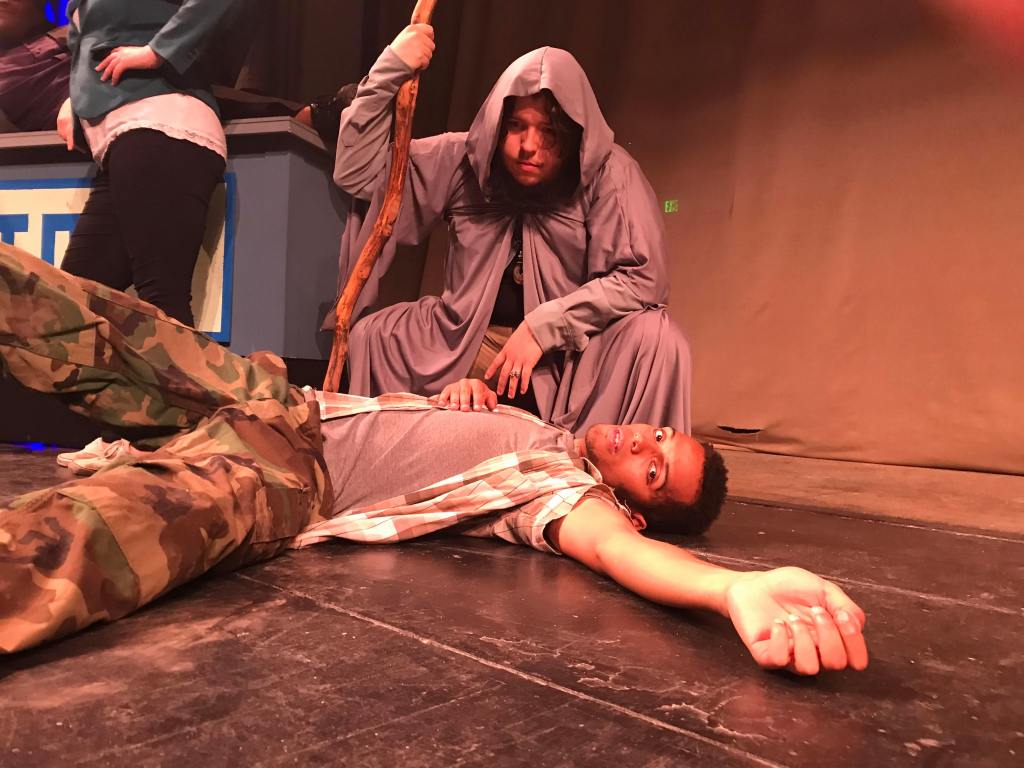
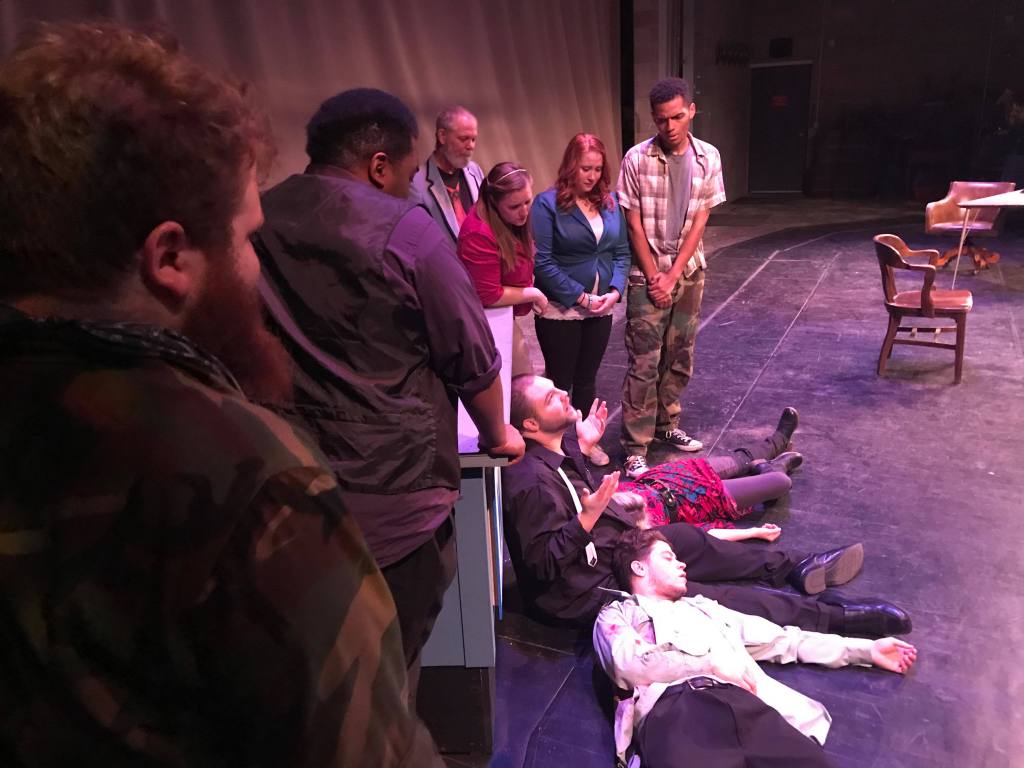
In a special bonus episode, I talk with Brad Poer about his Antigone: Closure. He graciously shared these production photos so that you can get a better sense of the production we discuss in the episode.

If you’re interested in learning more or producing your own version of Antigone: Closure, you can contact Brad via email at poreb@kellogg.edu.

Greek Tragedy XI: Sophocles’s Antigone, or Antigone Doesn’t Care What You Think

This tightly written play leaves us with a lot to think about. I touch on a few points in the episode, but there’s a lot more that we can talk about, even more than in the prompts below.

Discussion Prompts
  1. Creon states that Polyneices’s goal was spilling blood and selling the people of Thebes into slavery.  Given what we know about the myth, that Polyneices and Eteocles had agreed to share the crown but then Eteocles refused to give up the crown when his turn was over, what do you think about Creon’s assessment of why Polyneices attacked Thebes?  What does this tell us about why we should (or perhaps should not) trust Creon as a leader?
  2. What are your thoughts on the role of the chorus as passive supporters of Creon?  How does this speak to us as members of a representative democracy today? 
  3. Who would you cast as the sentry?  Why?
  4. In one of his speeches, Creon talks about how money is the root of all evil.  If you were adapting this play for today, how would you handle this section in light of the role of money in politics today?  (As a reminder, I live in the US.  If you live elsewhere, this might not be as big of an issue in your political system.)
  5. Elizabeth Bobrick writes about how Antigone presents the dangers of extremism.  Who is the extremist in this play?  Antigone?  Creon?  Both?  Why?  What does this teach us about life today?
  6. Is it important that Antigone is a woman?  Why or why not?
  7. Which sister is right?  Antigone or Ismene?  Why?
  8. What are your thoughts on the relationship between Antigone and Ismene?
  9. Why do you think the Chorus prays to Dionysus (as opposed to another god) for Thebes to be healed? 

Greek Myth II & III: Hesiod’s Theogony, or Imagine if Hesiod Had an Ancestry.com Account Part 1 & Part 2

The Theogony was a little too long to do in one episode, so I split it in two. But for discussion purposes, we’ll keep it all together.

Discussion Prompts
  1. Gaia, the Muses, Memory, Night, the Fates, the Furies… The Theogony is populated by women who have power and are in many ways equal to their male counterparts.  What are your thoughts on gender in the Theogony?  
  2. What do you think might have been happening in society that gave us the story of the Olympian overthrow of the Titans?
  3. Ouranos swallows his children.  Zeus swallows his wife.  What does this say about power roles?
  4. What is your favorite myth or mythological character?  Why?
  5. Why do you think Hesiod keeps coming back to Heracles in the Theogony?
Design a site like this with WordPress.com
Get started