The Power of Myth VI: Masks of Eternity, or What is God?

In this episode, we conclude our look at Joseph Campbell and The Power of Myth.

Discussion Prompts
  1. Where do you see god or the divine?
  2. How can atheism and mythology work together?
  3. Mythology and life are full of circles. Which one is your favorite? Why?
  4. What about the Power of Myth did I not talk about that you think we should discuss?

Greek Epics XXI: Iliad Book 20, or It Only Took 20 Books To Get Here

Achilles has finally entered the battlefield, and he turns out to be just as brutal of a fighter as promised.

Discussion Prompts
  1. Who is your favorite character? Why?
  2. Why do you think so much time is spent on the gods?
  3. Why do you think so much time is devoted to Aeneas talking?

Greek Tragedy XVII: Euripides’s Aclestis, or The Good Wife

Meet Euripides, the cheeriest of the Greek tragedians.

Discussion Prompts
  1. What does Alcestis tell us about the expectations for women, particularly wives, in Ancient Greece?
  2. Who would you cast as Death?  Why?
  3. Who would you cast as Heracles? Why?
  4. Is Admetus as nice of a person as Apollo and Heracles seem to think?
  5. Who benefits from Alcestis’s return to life?
  6. What do you think Alcestis will have to say in three days when she’s allowed to speak again?
  7. What does this play tell us about the relationship between guests and hosts?
  8. If you were directing this play today, where and/or when would you set it? Why?

Greek Myth IX: Hymns to Aphrodite, or When Peleus Met Aphrodite

This episode covers the three Homeric Hymns dedicated to Aphrodite, numbers 5, 6, and 10. In the episode, I mentioned a few things that I would share, and I’m pleased to say I was able to find versions of all of them that I could share.

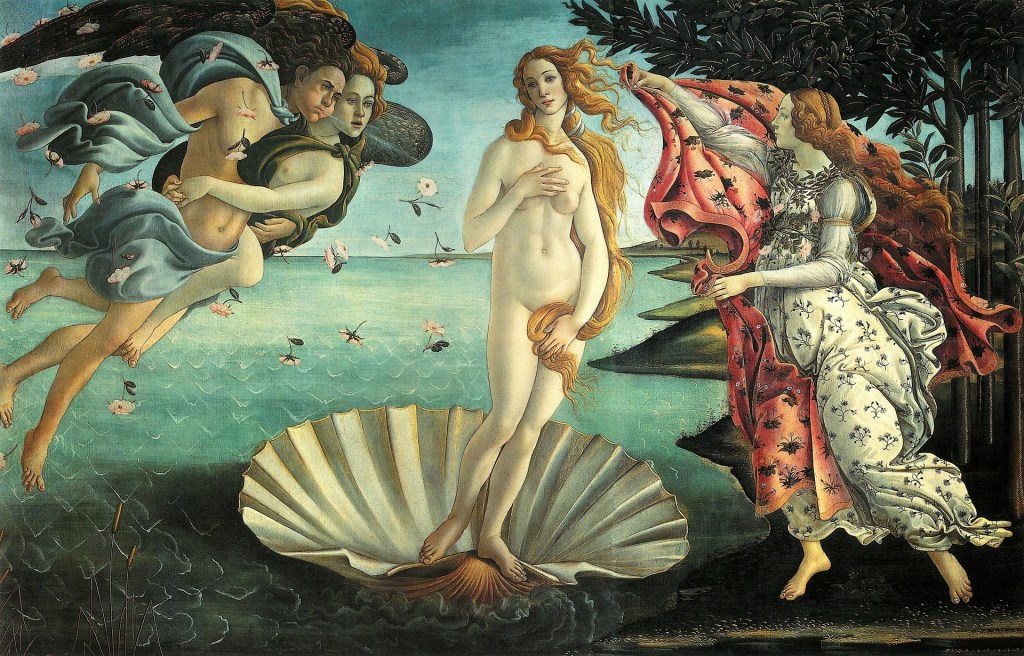
Boticelli's Birth of Venus
Boticelli’s Birth of Venus, which could also be titled Homeric Hymn 6
The Rose Adagio from Sleeping Beauty, or how I imagine all of the gods as they propose to Aphrodite
And now that you know the Rose Adagio, treat yourself to the Tart Adage from Alice’s Adventures in Wonderland
Discussion Prompts
  1. In Hymn 5, Anchises is hanging out by the huts while all of the other shepherds are tending the animals. Why do you think he isn’t with them?
  2. What does Hymn 5 tell us about the role of women in the ancient Mediterranean world?
  3. Why do you think Aphrodite objects to the fate of Ganymede?
  4. Whose fault is it that Tithonos has eternal life but not eternal youth? Eos or Zeus? Why?
  5. What does the “relationship” between Aphrodite and Anchises say about consent?
  6. How would you describe the relationship between Aphrodite and the Horai, especially working from the knowledge that they are all related to fertility and agriculture?
  7. What do you think the original purpose of Hymn 10 was?

Greek Epics XX: Iliad Book 19, or Agamemnon Apologizes… Sort Of

We still aren’t quite ready for battle, but at least Achilles and Agamemnon are friends again…

Discussion Prompts
  1. Why is Achilles the only Myrmidon brave enough to look at the armor from Hephaistos?
  2. If you were a speech writer for Agamemnon, how would you rewrite his apology speech?
  3. What do you think about Briseis in this book? For real? Or just an act?
  4. We know that Achilles is mortal, but he is filled with divine things in this book (i.e. armor, nectar/ambrosia, fire, his maternal line). Are divinity and immortality two different things? Why or why not?
  5. Why doesn’t Homer include anything about the famous Achilles’s Heel?

Greek Comedy XIV: Menander’s Dyskolos, or the Remains of the New Comedy

Today’s episode: The last Greek comedy!

Discussion Prompts
  1. We have now seen Old Comedy, Middle Comedy, and New Comedy. Which is your favorite? Why?
  2. Are you familiar with Moliere’s The Misanthrope? If so, which play do you prefer, Dyskolos or The Misanthrope?
  3. Pan is a nature god, and the Nymphs are nature goddesses. Is this important? If so, why?
  4. How do you think Myrrhine feels about Sostratos?
  5. Sostratos knows that he loves Myrrhine. Do you think he really does?
  6. Who is your favorite character? Why?
  7. If you were directing this play today, what is your dream cast?

The Power of Myth V: Love and the Goddess, or Love is Love is Love is Love

Campbell and Moyers may stumble into progressive thought, but they get there nonetheless.

Discussion Prompts
  1. Have you read Tristan and Isolde? Do you want to talk about it? Discuss.
  2. I didn’t talk about the role of virgin births in mythology and religion, but Campbell does expound on them. Why do you think they’re important?
  3. Do you agree with Campbell’s take on eros/libido versus romantic love? Why or why not?
  4. What is your favorite song from Animaniacs? Why?

Greek Epics XIX: Iliad Book 18, or Grief Hurts

Achilles has finally learned of the death of Patroklos, but there is still the little problem of Hektor wearing his armor…

Discussion Prompts
  1. What do you think would have happened if Hektor had taken the advice of Poulydamas? Is it too soon to ask/answer this question?
  2. Why does Homer spend so much time describing the new shield of Achilles?
  3. What do you think of how Achilles is portrayed in this book? Thetis? Hephaistos?
  4. I’ve repeatedly said that Apollo doesn’t play fair. Should I be saying the same about Athena and Hera? Why or why not?
  5. A major theme of this book is grief. What do you think of how grief is portrayed in this book?

Greek Tragedy XVI: Sophocles’s Oedipus at Colonus, or When Oedipus Met Theseus

In this episode, we reach the end of Sophocles’s plays and see both the playwright and Oedipus as old men.

Discussion Prompts
  1. Do you think radio, or podcast, is the best medium for Greek tragedies today? Why or why not?
  2. If you were producing the Sophocles Oedipus trilogy, would you cast the same man as Oedipus in both Oedipus Rex and Oedipus at Colonus? Why or why not? What about Antigone, Ismene, and Creon who appear in all three plays?
  3. If you were designing the set and/or lighting for Oedipus at Colonus, how would you show that Colonus is a liminal space?
  4. How do you think the story would have ended if Eteocles hadn’t changed his mind about Creon becoming ruler of Thebes after Oedipus was exiled?
  5. Compare and contrast Aeschylus’s The Eumenides with Sophocles’s Oedipus at Colonus.
  6. What do you think of Creon in this play? What about his relationship to Antigone? Is there consistency between Oedipus at Colonus and Antigone?
  7. Fate plays a huge role in the entire Oedipus myth. Discuss.
  8. Much like the Star Wars original trilogy and prequels, these plays were not released in chronological order. Do you think it would be better to present these in order by chronology or release date? Why?

Greek Myth VIII: Hymns to Hermes, or Cheeky from the Start

In this episode, we cover the two Homeric Hymns to Hermes, numbers 4 and 18.

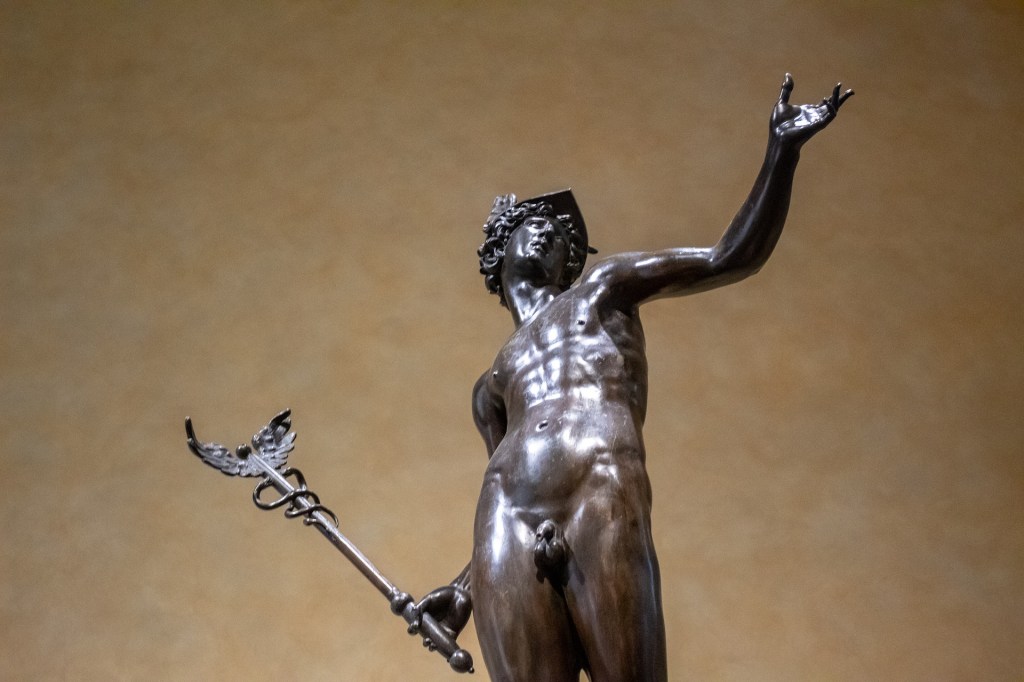
Hermes holding his caduceus
Hermes holding his caduceus. Image by Nicholas Demetriades from Pixabay 
Discussion Prompts
  1. Working off the idea that Hymn 18 is a kind of abstract for Hymn 4, now I’m curious what you think. If the Homeric Hymns were an academic journal, what would it be called? Who would be on the editorial board? Who would be the peer reviewers?
  2. We met Prometheus in Prometheus Bound. He is Atlas’s brother which means he is also Hermes’s great-uncle. Why is this important?
  3. Have you read George O’Connor’s Olympians series? If so, which one is your favorite (so far)?
  4. Does it matter that the tortoise is female? Why or why not?
  5. Hermes is said to have invented sandals. What do you think the other gods have been wearing on their feet?
  6. Hermes is said to have invented fire. Prometheus gave fire to humans. Can you create a timeline of Greek mythology?
  7. How do you think Maia feels about Hermes’s midnight exploits? Why?
Design a site like this with WordPress.com
Get started