Greek Epics XLI: Odyssey Book 16, or When Two Epics Become One

Odysseus finally sees his son in Book 16 of The Odyssey.

Discussion Prompts
  1. What does this book have to say about dissembling and disguise?
  2. What do you think would have happened if Eumaeus reached Penelope first? Would the suitors still have learned that Telemakhos has returned? Why or why not?
  3. If you were Athena, how would you make Odysseus look for his revelation to Telemakhos?
  4. What’s your favorite part of Free to Be… You and Me?
  5. Who’s your current favorite character? Least favorite? Why?
Greek Tragedy XXVII: Euripides’s Iphigenia in Tauris, or She’s Only Mostly Dead

I told you that Euripides just keeps getting darker and darker the farther we get into his career.  Well, I lied.  Iphigenia in Tauris is a surprisingly light play, at least compared to the rest of the tragedies of Euripides.

Discussion Prompts:
  1. Is Iphigenia really alive? Why or why not?
  2. Why does Athena appear at the end? Why not another god? And who is she there to protect? Why?
  3. How would you stage this play today? Especially the ending, how would you handle Athena’s instructions to Orestes and Iphigenia?
  4. How long after the Trojan War do you think this play takes place? Why?
  5. Who would you want to play? Why?
  6. What other stories does this play make you think of? Why?

Greek Myth XIX: Hymn to Hephaistos, or Don’t Blow Your Top

We get a glimpse of Hephaistos in this Homeric Hymn #20.

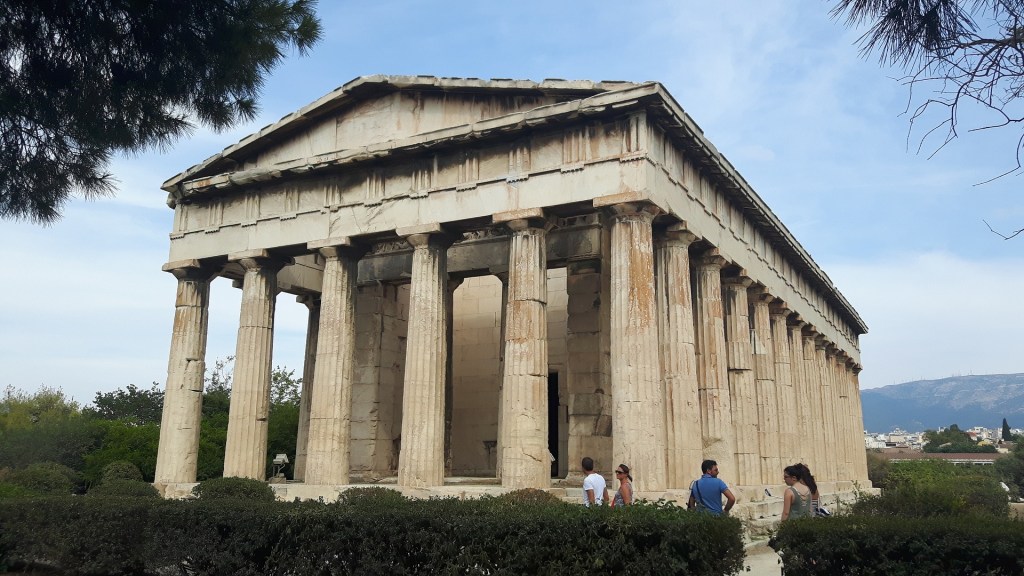
The Hephaiston or Temple of Hephaistos in Athens
Image by Kuchma from Pixabay
Discussion Prompts
  1. AP Credit: Compare/contrast Hephaistos and Athena.
  2. The gifts of Hephaistos and Athena allow mankind to live in houses year-round. Do you think there was a time mankind only lived in houses part of the year? If so, why were they living in caves for part of the year?
  3. Who do you like better: Athena or Hephaistos? Why?

Greek Epics XL: Odyssey Book 15, or Remember Telemakhos?

The Telemakhy and the Odyssey finally meet up in Book 15 of The Odyssey.

Discussion Prompts:
  1. AP Credit: Compare/contrast the two slave stories that come out in Eumaeus’s history.
  2. How much agency do you think the young female slave has when she plots with the Phoenicians to kidnap Eumaeus and liberate herself?
  3. Why do you think Telemakhos agrees to let Theoklymenos come with him to Ithaka?
  4. What’s your favorite bird-sign? Why?
  5. What do you think of Odysseus now? Telemakhos? Eumaeus?

Roman Comedy IX: Plautus’s Truculentus, or Don’t Let the Riley Translation Confuse You

The Riley translation gets in the way of Plautus’s Truculentus.

No translation problems when the play is done in Latin!
But since you probably don’t speak Latin, here’s a selection in English.

I confess to getting horribly confused by the Riley translation. As I was trying to clear up the character names, I stumbled across this delightful “blog” featuring posts from the primary characters of Diniarchus, Phronesium, and Stratophanes.

Discussion Prompts
  1. Who, if anyone, is honorable in this play? Why? If no one, why not?
  2. What does this play have to say about women?
  3. How would you present this play today? The examples above are in modern dress. Would you choose a similar update? Why or why not?

Greek Epics XXXIX: Odyssey Book 14, or This Little Piggy Went Close to Home

Odysseus visits his old swineherd in Book 14 of The Odyssey.

Discussion Prompts
  1. How much of the story that Odysseus tells Eumaeus is true? Why?
  2. How does the story Odysseus tells Eumaeus color what you think about the story that he told the Phaiakians? Why?
  3. What do you think of Odysseus now? Why?
  4. Why do you think Odysseus doesn’t reveal who he is to Eumaeus?
  5. AP Credit: Compare/contrast Odysseus’s time with the Phaiakians and his time with Eumaeus.

Greek Tragedy XXVI: Euripides’s Trojan Women, or It’s Always Darkest Before It Goes Pitch Black

I told you that Euripides just keeps getting darker and darker the farther we get into his career. The Trojan Women is pretty grim. A content warning: This play contains a rather grisly infanticide.

Discussion Prompts
  1. AP Credit: Putting this play in the context of the time in which it was written (during the Peloponnesian War), what is Euripides’s message to Athens?
  2. The usual directing questions: Where and when would you set it? Why? How would you cast it? Why? What directing choices would you make regarding the final exits of Cassandra or Hecuba or anyone else?
  3. What do you think of these portrayals of Menelaos, Cassandra, Hecuba, Helen, and Andromache? How do they align with how we have seen them in other sources (Homer, Aeschylus, Sophocles)?
  4. This play reminds me of Shakespeare’s King John. What does it remind you of? Why?

Greek Epics XXXVIII: Odyssey Book 13, or Home Again, Home Again, Sailing Is Done

Odysseus is finally home! Sort of. We’re only half-way through. There’s a lot that still needs to be resolved.

Discussion Prompts
  1. AP Credit: Liminality and sleep. Discuss.
  2. There’s a lot that happens when Odysseus is asleep (the bag of winds, the cattle of the Sun, the Phaiakians drop him off at Ithaka). Why do you think that is?
  3. How much of what happens to Odysseus is real? What makes you reach your conclusion?
  4. Why doesn’t Zeus want Poseidon to put mountains around Skheria? What is the actual effect of the punishment meted out on the Phaiakians?
  5. What do you think about Odysseus now? Athena? Poseidon? Zeus? Anyone else we’ve met along the way?

Roman Comedy VIII: Plautus’s Trinimmus, or The Money Pit

Despite the title, there are more than three pieces of money in this play.

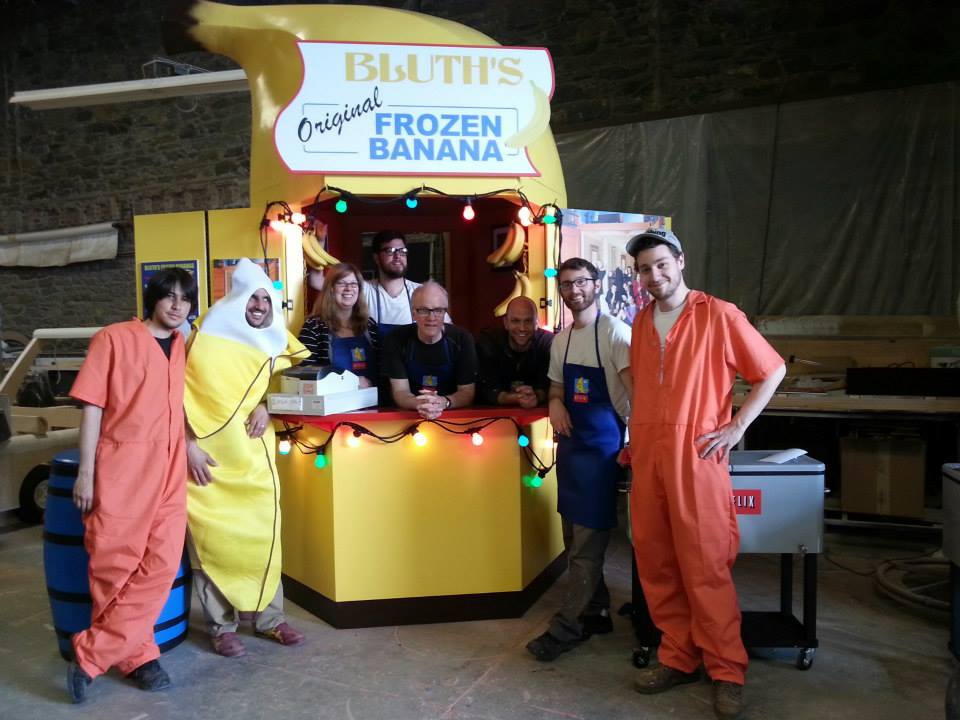
There’s money in the banana stand! I couldn’t resist. That’s one of my cousins (or rather my dad’s cousins) in the middle of the banana stand his studio made to promote the then-new season of Arrested Development. Photo Credit: David Banner
Discussion Prompts
  1. In the episode, I briefly compare this play to the biblical story of the prodigal son. What other stories does this play remind you of? Why?
  2. AP Credit: Compare/contrast the two families in this play.
  3. There are no women in this play. How would you handle this if you were directing it today? Plus the usual questions about setting, etc.
Design a site like this with WordPress.com
Get started