Greek Epics XLV: Odyssey Book 20, or More Rising Action

Just when you think the suitors are about to get their just desserts, Homer manages to stretch things out.

Fun anecdote: When my prof shared this episode in class, he commented that none of us were old enough to have seen this before. I mean, we weren’t even born in the ’70s. And there was little ol’ me in the front row, raising my hand. And he looked at me and said, “Really?” And I nodded and said, “’78.” Admittedly, I think I was the only senior in the class, and I probably was the only person in the class who had been born in the ’70s, and I wasn’t old enough to have seen this when it originally aired, but it did make me giggle, possibly inappropriately when I look back at it, which makes it all the more fitting…

As promised, I present to you “Chuckles Bites the Dust.” May you laugh until you cry.
Discussion Prompts
  1. Does Penelope know that Odysseus is home? Why or why not?
  2. What does this book have to say about free will?
  3. How do you think things might be different if Athena kept out of it?
  4. Who is your favorite character? Why?

Greek Tragedy XXIX: Euripides’s Helen, or Dr Livingston, I Presume?

Helen is alive and well and living and Egypt when everyone thought she was in Troy. Surprise!

Discussion Prompts
  1. Euripides was from Athens; Menelaos is from Sparta. What does this play have to say about how Athenians feel about Spartans? Why?
  2. What does this play have to say about war? Explain.
  3. Which Helen do you prefer? The Homeric one or this one?
  4. Who is in your dream cast for this show?

Greek Myth XXI: Hymn to Zeus, or He’s Considerably Better Than All the Rest

Whether the poet thinks he’s the best or is just making sure to flatter the god’s ego, Zeus is deemed the greatest in Homeric Hymn 23.

I know that this subtitle is a little obscure. Here’s where my brain went when I read the first line of Hymn 23.

It’s no Oedipus Tex, but it still makes me giggle.
Discussion Prompts
  1. Do you think the poet really believes Zeus is all that? Why or why not?
  2. Which Greek god would you write a hymn about how they’re the best? Why?

Greek Epics XLIV: Odyssey Book 19, or Scar Face, I Mean, Leg

Memories are triggered by the scar on Odysseus’s leg in Book 19 of The Odyssey.

Discussion Prompts
  1. Do you think Penelope knows who she’s talking to? Why or why not?
  2. How long do you think the shroud has been finished? Why?
  3. What do you think of the interaction between Eurykleia and Odysseus?
  4. AP Credit: The Odyssey as a metaphor for memory. Discuss.

Roman Comedy XI: Plautus’s Asinaria, or The One With the Donkeys

This play isn’t about donkeys, but it is the one with the donkeys.

Discussion Prompts
  1. What does this play have to say about materialism?
  2. Should this play be treated as satire or farce? If so, how does that affect how you would interpret this play as a director?
  3. Why do you think the twists regarding the competition for Philenium come so late in the play?
  4. How would you rank the ending of this play when compared to the ending of other plays by Plautus?

Greek Epics XLIII: Odyssey Book 18, or WWE Presents The Odyssey

Odysseus almost drops his disguise in Book 18 of The Odyssey.

Discussion Prompts
  1. AP Credit: Liminality. Discuss.
  2. Athena does a lot in this book. What does that tell us about free will?
  3. What does it say about the suitors that they still have homes to go back to each night?
  4. What do you think of Penelope? Telemakhos? Athena? Odysseus?
  5. Are you still enjoying The Odyssey? Why or why not?

Greek Tragedy XXVIII: Euripides’s Ion, or Is that Another Happy Ending?

To keep us on our toes, today we have another tragedy from Euripides that isn’t completely tragic.

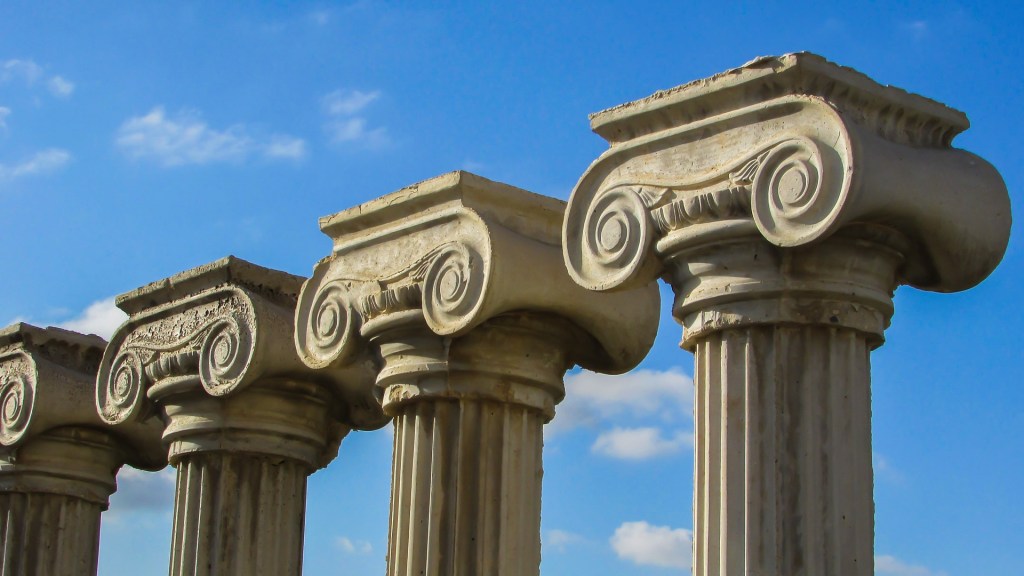
As promised – Ionic columns (Image by Dimitris Vetsikas from Pixabay)
Discussion Prompts
  1. Ion is about 20 years old. If you were directing this today, how old would you make Creusa? Why?
  2. What does this play have to say about religion, fate, the power of the gods, free will, etc.?
  3. Doric, Ionic, or Corinthian? Which is your favorite order of columns? Why?
  4. Who would you want to play? Why?
  5. Why do you think Apollo is treated so negatively in comparison to the other religious figures in this play?
  6. And, of course, my usual questions about directing? Setting? Interpretation? Casting? Why?

Greek Myth XX: Hymn to Poseidon, or The Hymnist Lost His Map

The poet gets a little lost in the Homeric Hymn to Poseidon.

Discussion Prompts
  1. Helikon or Helike? Why?
  2. Poseidon is the god of the sea, horses, and earthquakes. What three random things would you want to be the god of?
  3. AP Credit: Explain the relationship between the things that Poseidon is the god of. What is the logic behind them?

Greek Epics XLII: Odyssey Book 17, or Odysseus Finally Goes Home

Odysseus finally reaches the palace in Book 17 of The Odyssey.

Discussion Prompts
  1. Who is your favorite suitor? Why?
  2. Penelope is compared to both Artemis and Aphrodite. Which is it? Why?
  3. How is Argos still alive?
  4. WTF is wrong with the suitors?
  5. Why is Eumaios addressed in the second person throughout this book?
  6. Who is your favorite character now? Why?

Roman Comedy X: Plautus’s Amphitruo, or When Greek Mythology Meets Roman Comedy

Plautus dips into mythology in Amphitruo.

Discussion Prompts
  1. Plautus calls this a “tragicomedy.” Do you agree with this designation? Why or why not?
  2. How would you cast this play? How twin-like would you make Sosia/Mercury and Amphitryon/Jupiter?
  3. Why do you think the story of Hercules slaying the serpents is included in this play?
  4. AP Credit: Draw the line from New Comedy to Monty Python.
Design a site like this with WordPress.com
Get started